
Why Local SEO Matters for Small Businesses
When someone searches "near me" on their phone, they're usually ready to buy, book, or visit within the hour. Local SEO is what determines whether your business shows up in that moment or gets skipped in favor of a competitor with a better-optimized listing.
The good news is that local SEO doesn't require a huge budget or a full-time marketing team. A handful of consistent, well-executed basics — a complete Google Business Profile, accurate citations, real reviews, and a fast, mobile-friendly website — can move a small business from invisible to easy to find. Here's the checklist to work through.
Claim and Optimize Your Google Business Profile
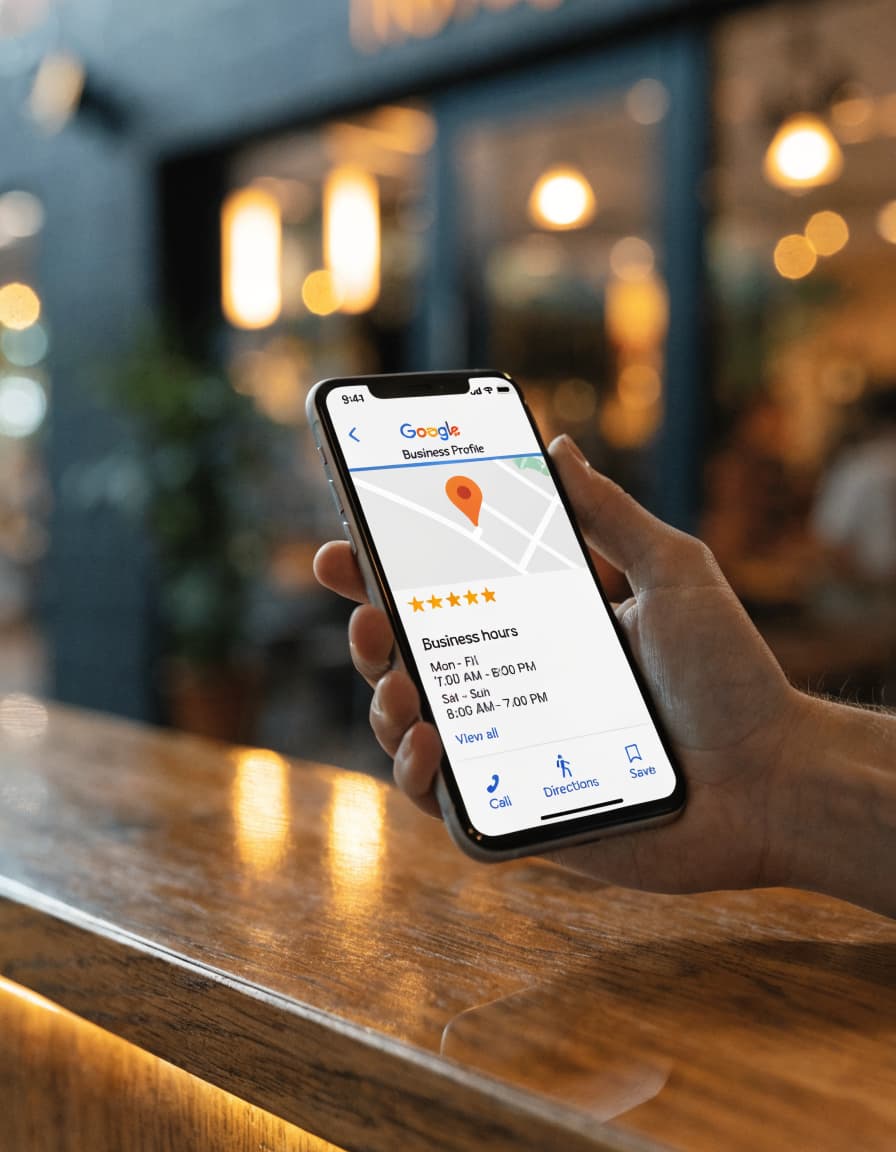
Your Google Business Profile is the single most important local SEO asset you have. It's what populates the map pack, the knowledge panel, and the directions button that shows up when someone searches for a business like yours nearby. If it's unclaimed, incomplete, or out of date, you're handing that visibility to a competitor.
Start by claiming your listing if you haven't already, then fill out every available field: business category, service area, hours, phone number, website link, and a description that naturally includes what you do and where you do it. Add real photos of your storefront, team, and work — listings with photos consistently get more clicks and direction requests than those without.
Keep it active. Posting updates, responding to questions, and correcting hours around holidays all signal to Google that the listing is maintained, which helps it rank above stale, abandoned profiles.
Build Consistent Citations and Collect Reviews

A citation is any place online that lists your business name, address, and phone number — think directories, industry associations, and local chambers of commerce. Search engines cross-reference these mentions to confirm your business is legitimate and located where you say it is. The catch is consistency: if your address is formatted differently across ten different sites, it weakens the trust signal instead of strengthening it.
Reviews carry similar weight, but with an added ranking boost. Businesses with more recent, positive reviews tend to outrank those with few or outdated ones, and the text inside reviews — when customers mention your service or location by name — can reinforce your relevance for those exact search terms.
Make it easy for happy customers to leave a review by sending a direct link right after a purchase, appointment, or job completion. Respond to every review, good or bad — it shows future customers, and search engines, that someone is actively paying attention.
On-Page and Technical Basics That Support Local SEO
Your Google Business Profile brings people to your listing, but your website is what convinces them to actually reach out. A handful of on-page details make it easier for both customers and search engines to understand where you are and what you offer.
Turning Checklist Items Into Consistent Rankings
None of these steps work as a one-time fix. Local SEO rewards businesses that stay consistent — profiles that get updated, reviews that keep coming in, and websites that stay fast and accurate. Treat this checklist as a recurring habit rather than a box to check once and forget.
If your website itself is the weak link — slow, outdated, or missing the basic local SEO structure — that's the first thing worth fixing. Visit MiSitioWebs.com to launch a fast, mobile-friendly, search-ready website in about 30 minutes.